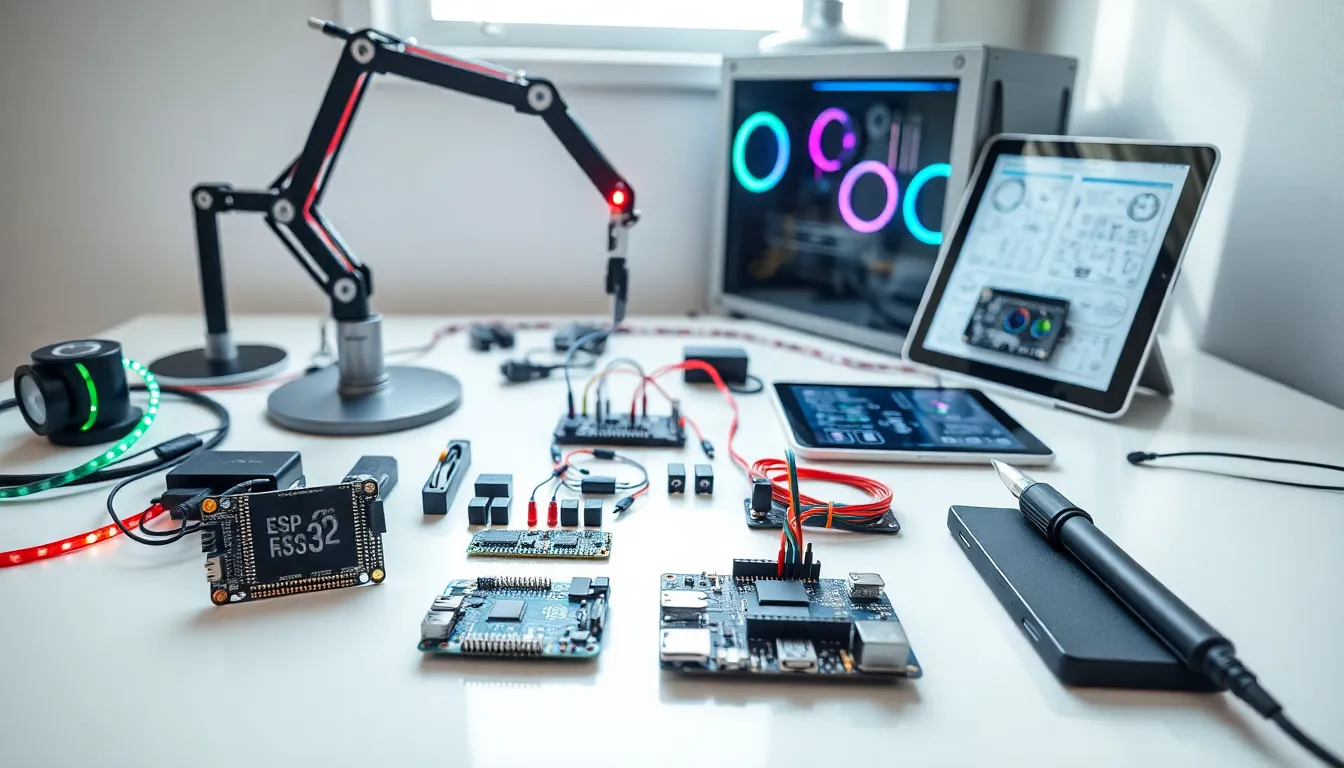

Hardware ideas can transform a weekend hobby into something genuinely useful. Whether someone wants to automate their home, build a robot, or upgrade their PC, the right project starts with the right components. This guide covers practical hardware ideas across five categories. Each section offers specific suggestions that makers of all skill levels can explore. From smart sensors to custom wearables, these projects combine creativity with real-world function.
Table of Contents
ToggleKey Takeaways
- Hardware ideas span five practical categories: smart home automation, robotics, custom PC builds, wearables, and maker projects for all skill levels.
- Affordable microcontrollers like ESP32 and Arduino make DIY hardware ideas accessible, with starter projects costing as little as $30-50.
- Smart home automation remains one of the most popular hardware ideas, using platforms like Home Assistant to connect sensors, cameras, and voice-controlled devices.
- Custom PC builds and upgrades—such as adding NVMe SSDs or upgrading GPUs—deliver immediate performance gains for gamers and creators.
- Wearable hardware ideas require lightweight, power-efficient components like LilyPad Arduino and addressable LED strips for fitness trackers and interactive clothing.
- Successful projects start with research on platforms like GitHub and Instructables, a complete bill of materials, and basic soldering and programming skills.
Smart Home Automation Hardware
Smart home automation remains one of the most popular hardware ideas for DIY enthusiasts. The barrier to entry has dropped significantly, and affordable components now make home automation accessible to beginners.
Essential Components
Most smart home projects start with a microcontroller. The ESP32 and ESP8266 offer built-in WiFi, which makes them ideal for connected devices. They cost under $10 and work with most sensors and actuators.
Popular hardware ideas in this category include:
- Smart thermostats using temperature sensors and relay modules
- Automated lighting systems with motion sensors and LED controllers
- Security cameras built from Raspberry Pi boards and camera modules
- Voice-controlled outlets using relay boards and smart assistants
Integration Platforms
Home Assistant runs on a Raspberry Pi and connects different devices into one system. It supports thousands of hardware components. Users can create automations that trigger based on time, location, or sensor readings.
For those who prefer commercial ecosystems, Zigbee and Z-Wave modules provide reliable wireless communication. These protocols use less power than WiFi and work well for battery-powered sensors.
Robotics and Maker Projects
Robotics projects represent some of the most rewarding hardware ideas available. They combine mechanical assembly, electronics, and programming into a single build.
Beginner-Friendly Robots
A line-following robot makes an excellent first project. It requires two motors, a motor driver, infrared sensors, and an Arduino. Total cost runs about $30-50 for all components. The programming logic is straightforward: read sensor values, adjust motor speeds.
Other accessible hardware ideas include:
- Obstacle-avoiding cars using ultrasonic distance sensors
- Robotic arms with servo motors and 3D-printed parts
- Balancing robots that use gyroscopes and accelerometers
Advanced Builds
Makers with more experience often tackle quadruped robots or drones. These hardware ideas require precise motor control and real-time sensor processing. Flight controllers like the Pixhawk handle complex calculations for drone stability.
Computer vision adds another layer. A Raspberry Pi with a camera can recognize objects, faces, or specific colors. OpenCV provides the software tools: the hardware needs enough processing power to run inference in real time.
Custom PC Builds and Upgrades
Custom PC builds offer hardware ideas that range from practical upgrades to elaborate showcase machines. This category appeals to gamers, content creators, and anyone who wants more control over their computing setup.
Performance Upgrades
The most impactful hardware ideas for existing PCs often focus on storage and memory. Swapping a hard drive for an NVMe SSD can cut boot times from minutes to seconds. Adding RAM improves multitasking and helps with memory-intensive applications.
GPU upgrades deliver the biggest gaming performance gains. Current-generation cards from AMD and NVIDIA support ray tracing and AI upscaling. Budget-conscious builders can find excellent value in previous-generation hardware.
Custom Builds
Building a PC from scratch provides complete control over every component. Key decisions include:
- Processor platform: Intel or AMD, each with different strengths
- Cooling solution: Air coolers or liquid cooling loops
- Case selection: Airflow-focused or compact form factors
- Power supply: 80+ efficiency ratings ensure reliability
Small form factor builds represent popular hardware ideas for those with limited space. Mini-ITX cases fit full-power components into remarkably compact enclosures.
Wearable Technology Concepts
Wearable hardware ideas push makers to think about size, power consumption, and comfort. These projects sit on the body, so they must be lightweight and unobtrusive.
Fitness and Health Trackers
DIY fitness trackers use accelerometers, heart rate sensors, and small displays. The LilyPad Arduino series was designed specifically for wearable hardware ideas. Its circular shape and sewable connections work well with fabric.
Common wearable projects include:
- Step counters using MEMS accelerometers
- Heart rate monitors with optical pulse sensors
- Posture correctors that vibrate when the user slouches
- UV exposure monitors for outdoor activities
Creative Wearables
LED-embedded clothing creates striking visual effects. Addressable LED strips like the WS2812B allow individual pixel control. Paired with a small microcontroller and battery pack, these hardware ideas produce wearable light shows.
E-textiles incorporate conductive thread and flexible sensors directly into garments. Pressure sensors can detect touch, while stretch sensors measure movement. These components enable interactive costumes and performance wear.
Getting Started With Your Hardware Project
Turning hardware ideas into finished projects requires planning and the right resources. A few steps can make the difference between success and frustration.
Research and Planning
Start by finding similar projects online. GitHub, Instructables, and Hackster.io host thousands of documented builds. These resources show what components work together and what problems to expect.
Create a bill of materials before ordering parts. List every component, quantity, and estimated cost. This prevents multiple shipping delays and helps with budgeting.
Sourcing Components
Popular suppliers for hardware ideas include:
- Adafruit and SparkFun: Quality components with excellent documentation
- Digi-Key and Mouser: Huge selection for specific electronic parts
- AliExpress: Budget options with longer shipping times
- Amazon: Fast delivery for common items
Building Skills
Basic soldering opens up most hardware ideas. A temperature-controlled iron, some practice boards, and a few YouTube tutorials provide sufficient foundation. Learning to read datasheets and schematics adds another level of capability.
Programming knowledge helps with any microcontroller project. Arduino’s C++ variant offers an accessible starting point. Python on Raspberry Pi provides more flexibility for complex applications.