
The hardware trends 2026 will bring are already taking shape, and they’re set to change how we compute, create, and connect. From AI-specialized chips to quantum leaps in processing power, this year promises significant shifts across the tech landscape. Whether you’re a developer, IT professional, or simply curious about what’s coming, understanding these hardware trends 2026 offers a clear advantage. This guide breaks down the key developments across processors, memory, sustainability, quantum computing, and graphics technology. Let’s explore what the year ahead holds for hardware.
Table of Contents
ToggleKey Takeaways
- Hardware trends 2026 center on AI-optimized processors with dedicated neural processing units (NPUs) from Intel, AMD, NVIDIA, and Qualcomm for faster on-device AI.
- DDR5 RAM and PCIe 5.0 SSDs become mainstream, delivering double the bandwidth and read speeds of previous generations.
- Sustainability drives 2026 hardware design, with ARM-based chips offering 20+ hour battery life and manufacturers adopting recycled materials and liquid cooling.
- Quantum computing advances with improved error correction and hybrid quantum-classical systems, bringing practical applications closer to enterprise use.
- Graphics technology leaps forward as ray tracing becomes standard on mid-range GPUs and OLED displays drop in price for wider adoption.
- Modular, repairable laptop designs from major brands extend product lifespans and reduce electronic waste in response to right-to-repair regulations.
AI-Optimized Processors and Chips
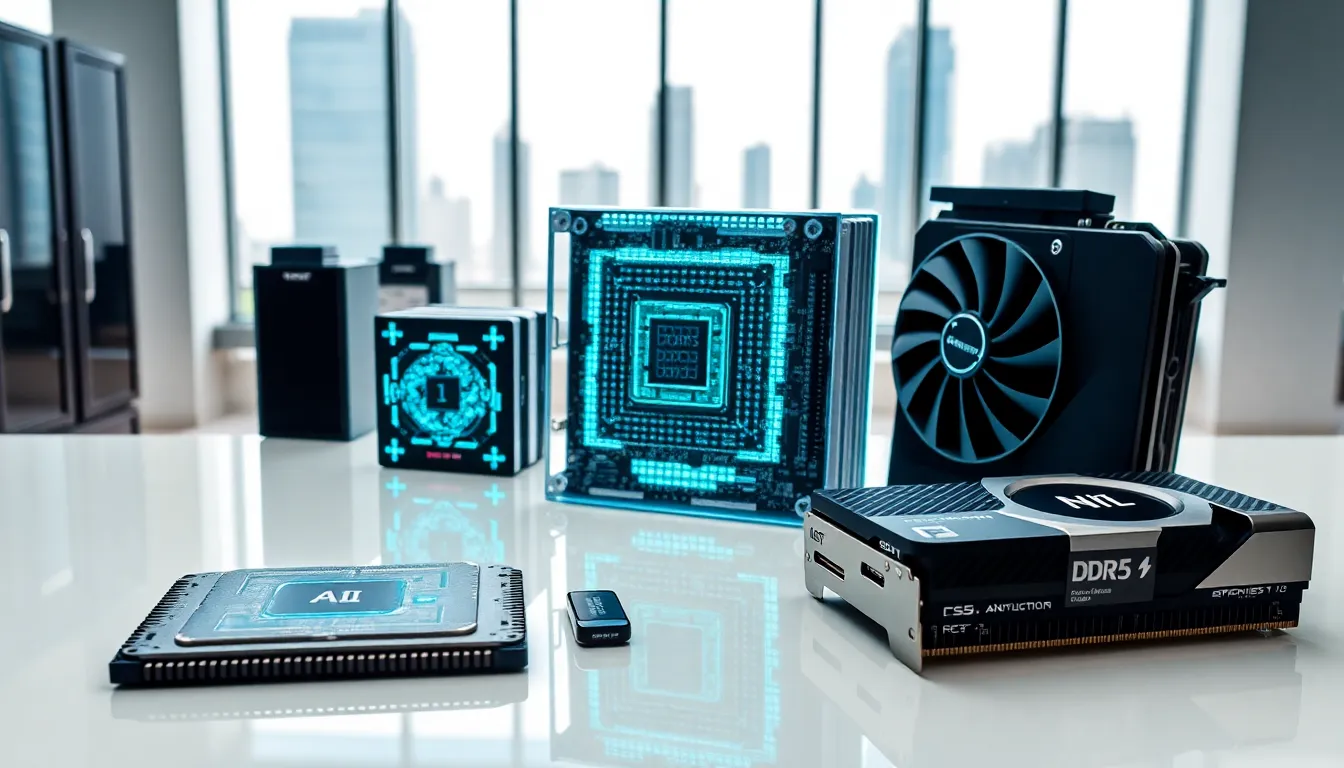
AI workloads demand specialized hardware, and 2026 delivers exactly that. Major chipmakers like Intel, AMD, and NVIDIA are releasing processors built specifically for machine learning and inference tasks. These AI-optimized chips feature dedicated neural processing units (NPUs) that handle AI computations far more efficiently than traditional CPUs.
Apple’s M-series chips have already demonstrated the power of integrated neural engines. In 2026, expect competitors to close the gap with their own solutions. Qualcomm’s Snapdragon X Elite and Intel’s Lunar Lake architecture both prioritize on-device AI processing. This shift reduces reliance on cloud computing and improves response times for AI applications.
The hardware trends 2026 brings also include smaller, more efficient transistor designs. TSMC and Samsung are pushing toward 2nm and even 1.4nm process nodes. Smaller transistors mean more computing power in less space, with lower energy consumption. For consumers, this translates to faster laptops, smarter phones, and more capable edge devices.
Data centers are upgrading too. NVIDIA’s Blackwell architecture and AMD’s MI400 accelerators target enterprise AI training. These chips can process billions of parameters, making large language models and generative AI more accessible to businesses of all sizes.
Advances in Memory and Storage Technology
Memory and storage see major upgrades in 2026. DDR5 RAM becomes the new standard across consumer and enterprise systems. DDR5 offers double the bandwidth of DDR4, with speeds reaching 8800 MT/s in high-end configurations. This boost benefits gaming, video editing, and scientific computing.
The hardware trends 2026 showcases also include the rise of LPDDR5X in mobile devices. This low-power memory variant delivers faster performance while extending battery life. Smartphones and ultrabooks benefit most from this technology.
Storage technology advances with PCIe 5.0 SSDs becoming mainstream. These drives achieve sequential read speeds above 14,000 MB/s, nearly double what PCIe 4.0 offered. Content creators and professionals who work with large files will notice the difference immediately.
CXL (Compute Express Link) technology gains traction in enterprise environments. CXL allows memory pooling across servers, improving resource utilization and reducing costs. This approach helps data centers scale more efficiently without proportionally increasing hardware expenditure.
3D NAND technology continues to stack layers. Samsung and Micron are producing 300+ layer NAND chips, increasing storage density while lowering cost per gigabyte. Expect 8TB and 16TB consumer SSDs to become more affordable by late 2026.
Energy-Efficient and Sustainable Hardware
Sustainability drives hardware design in 2026. Manufacturers face pressure from regulators, consumers, and investors to reduce environmental impact. The result? More efficient components and greener production methods.
Intel and AMD have committed to using 100% renewable energy in their manufacturing facilities. Apple continues to expand its recycled materials program, with some components now made entirely from recovered aluminum and rare earth elements.
The hardware trends 2026 emphasizes include power-efficient chip architectures. ARM-based processors consume significantly less energy than traditional x86 designs while delivering competitive performance. Microsoft’s Copilot+ PCs and similar devices use these efficient chips to extend battery life beyond 20 hours.
Data centers adopt liquid cooling and immersion cooling technologies. These methods reduce energy consumption by 30-40% compared to traditional air cooling. Companies like Microsoft and Google are deploying underwater data centers and using seawater for natural cooling.
Repairability becomes a selling point. Framework laptops pioneered modular, user-upgradeable designs. In 2026, Dell, HP, and Lenovo introduce similar options. This approach extends product lifespans and reduces electronic waste. The EU’s right-to-repair regulations push these changes globally.
The Rise of Quantum Computing Hardware
Quantum computing moves from research labs toward practical applications in 2026. IBM, Google, and smaller startups like IonQ and Rigetti are building more stable quantum processors with higher qubit counts.
IBM’s roadmap targets 100,000 qubits by 2033, but intermediate milestones in 2026 bring us closer. Their Heron processor and modular Quantum System Two architecture allow multiple quantum processors to work together. This approach sidesteps some physical limitations of individual chips.
The hardware trends 2026 introduces also include error correction improvements. Quantum computers are notoriously prone to errors from environmental interference. New techniques like surface codes and concatenated codes help maintain calculation accuracy for longer periods.
Google’s Willow chip demonstrated quantum error correction that actually works. As these methods improve, quantum computers become viable for real-world problems in drug discovery, financial modeling, and cryptography.
Hybrid quantum-classical systems gain popularity. These setups use traditional computers for most calculations, offloading only specific problems to quantum processors. This practical approach makes quantum computing accessible to more organizations without requiring full quantum infrastructure.
Next-Generation Graphics and Display Technology
Graphics hardware leaps forward in 2026. NVIDIA’s next-generation RTX 50 series brings significant performance gains for gaming and professional applications. AMD’s RDNA 4 architecture competes aggressively on price-to-performance ratios.
Ray tracing becomes standard rather than premium. Even mid-range GPUs now handle real-time ray tracing at playable frame rates. This technology creates more realistic lighting, shadows, and reflections in games and 3D applications.
The hardware trends 2026 delivers extend to display technology. OLED panels drop in price as LG and Samsung scale production. More monitors and laptops feature OLED screens with perfect blacks, vibrant colors, and faster response times.
Mini-LED technology offers a middle ground between LCD and OLED. These displays use thousands of tiny LEDs for precise backlight control. Apple’s Pro Display XDR popularized the technology, and now it’s reaching mainstream price points.
Refresh rates climb higher. Gaming monitors with 480Hz panels arrive for competitive esports players. Even productivity-focused displays reach 240Hz, making everything from scrolling to cursor movement noticeably smoother.
MicroLED remains expensive but shows promise. This technology combines OLED’s visual quality with longer lifespan and higher brightness. Large-format displays and premium laptops may feature microLED panels by late 2026.